How I decode my body’s yes’s and no’s
I recently went on two dates with a guy who had a lot of potential. The conversations were deep and interesting. We had alignment in our life stories and in what we’re each building. There was chemistry. And overall, he was a really genuine, kind person. I felt optimistic.
The first and second dates went well. From early on, he supported me in vocalizing my needs and stepping into my power more fully.
And yet, approaching the third date, I felt dread.
The dread lingered for a couple of days leading up to the date. It didn’t feel like anxiety or self-sabotage of a good thing. It felt like I was dragging myself to show up for something I genuinely didn’t want to show up for.
When the day of the date arrived, I woke up feeling what has become clear to me is an embodied “no.” So I honored it and I cancelled.
The people-pleasing patterns I grew up with would have had me go anyway. Hustle for approval. Override what I felt and not even recognize that I didn’t want it. But I’ve changed how I do things now. I tune into my body’s wisdom and trust it to make decisions, even when they don’t make logical sense.
What’s interesting is that this didn’t start with dating.
It started in my pleasure practice.
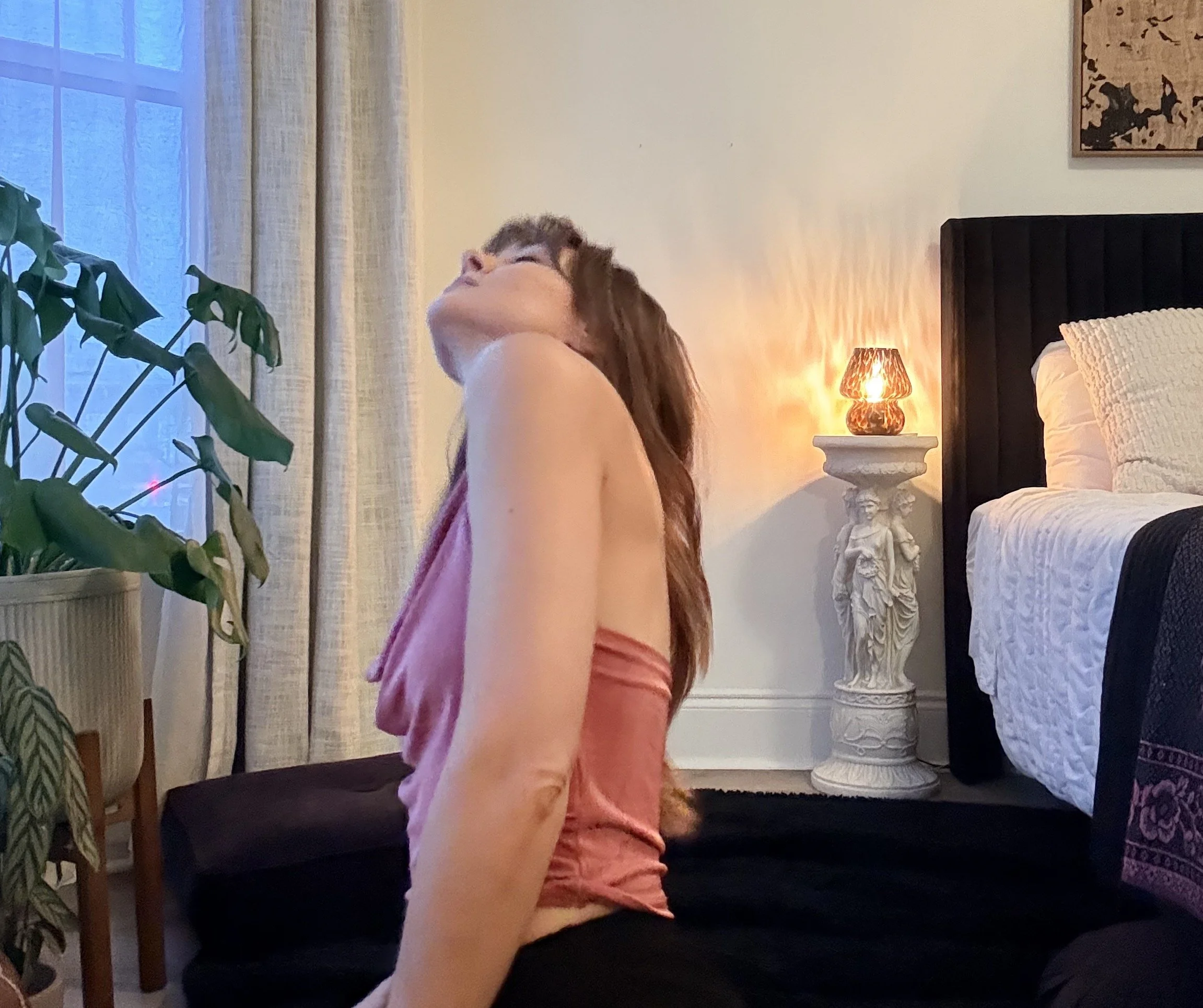
I began this work by reconnecting with my sexuality after a lifetime of cultural conditioning that kept me disconnected from my body and overriding its cues. One of the first things I practiced was asking for my own consent. Slowing down enough to notice if something was actually a yes in my body.
That practice, asking and then listening, started to change my relationship with myself.
Once I’d built that awareness in such an intimate space, I could feel the same cues everywhere else. It became harder to ignore when something wasn’t aligned, even in everyday decisions like this one.
So how did I know my body was telling me no?
These cues can be subtle sensations, shifts in energy, even thought patterns. It’s something you start to recognize over time. Context matters too because what feels like a yes one day can be a no the next. It’s not static.
At its simplest, a “no” tends to feel like contraction in the body, while a “yes” feels like some form of opening.
Here are some ways an embodied “no” has shown up for me:
Holding my breath or shallow breathing
A pulling back sensation, heaviness, or dread
A drop in energy or a feeling of “ugh” or resistance
Mental over-explaining or trying to convince myself, the instinct to override it with logic
Lack of genuine interest, even when something looks good on paper
A clear sense of having to push myself to show up (“I should just do it”)
Anxiety and a true “no” can feel similar. Anxiety has a more charged, buzzy quality. A “no” feels more solid.
Here’s how an embodied “yes” has shown up for me:
Subtle curiosity or openness to a person or situation
Energy that moves me toward something, even if there are nerves mixed in (You can feel a yes and still have nerves.)
A sense of clarity rather than mental negotiation (if I need a lot of convincing, it’s rarely a full-body yes)
Expansion, such as taking up space, saying what I want, expressing desire
Alignment with my values around embodiment, honesty, and depth
A yes doesn’t always feel like excitement. Sometimes a yes comes with challenges I know I’ll have to face, but I’m choosing it because it feels true.
A simple way I practice this:
I ask myself a clear yes or no question, and then pause.
Do I feel myself subtly move forward or back?
Does my breath open or tighten?
Does my body feel more spacious or more contained?
Your body usually answers before your mind finishes the sentence. It’s that initial reaction. It just takes practice to tune into the subtleties and to trust them.
If I’m not a yes, but I’m not a no either, I sometimes ask:
What would move me closer to a yes?
What do I need to feel supported right now?
Is this pause connected to something from my past that wants attention?
I’ve started to recognize my own patterns around yes and no. It turns out my “no” has been there all along. I’ve been recalibrating from a learned pattern of keeping the peace and suppressing my needs, toward understanding and honoring my body’s signals. The work for me has been trusting it without negotiating it away. Without getting pulled into my head and using logic to override my body’s wisdom.
It’s a shift from the mind and a sense of duty into the body and a sense of personal sovereignty.
What began as a pleasure practice has expanded far beyond it. It’s become a way I make decisions, relate to myself, and move through my life.
Connecting more deeply with my yeses has been about getting quieter. I still catch myself framing decisions as “should I override this feeling or not?” Growth for me looks like treating those feelings as information I act on, rather than input to debate.